Wednesday, December 18, 2013

H E A L T H

First of all, I just want to say that I love health. Nutritious food, strenuous exercise, and a daily dose of fresh air? I'm all about it. And living a disease- free life? Who doesn't wish this for them and their loved ones. And of course mental health: mental clarity and optimism are obviously very important in order to live a happy life. I love that our prophets and apostles offer advice on both Physical and Mental health, because both so important for our well- being, and often seem to be overlooked in religious settings. 

"

The state of our health affects every facet of our life—our feeling of personal well-being, our approach to work, our social interactions—even our service to the Lord." Barbara B. Smith, "Good Health- A Key to Joyous Living", Conference October 1978

Among the most familiar of the health scriptures is the eighty-ninth section of the Doctrine and Covenants, wherein the Lord specifies both substances that are for our use and those which are detrimental to us...Scientific research has verified the harmful effects of tea, coffee, tobacco, and alcohol—even upon the development of an unborn child." Barbara B. Smith, "Good Health- A Key to Joyous Living", Conference October 1978
“Nutritious meals, regular exercise, and appropriate sleep are necessary for a strong body, just as consistent scripture study and prayer strengthen the mind and spirit” (Thomas S. Monson,“That We May Touch Heaven,” Ensign, Nov. 1990, 46).
“The condition of the physical body can affect the spirit. That’s why the Lord gave us the Word of Wisdom. He also said that we should retire to our beds early and arise early (see D&C 88:124), that we should not run faster than we have strength (see D&C 10:4), and that we should use moderation in all good things. … Food can affect the mind, and deficiencies of certain elements in the body can promote mental depression. … Rest and physical exercise are essential, and a walk in the fresh air can refresh the spirit. Wholesome recreation is part of our religion, and a change of pace is necessary, and even its anticipation can lift the spirit” (Ezra Taft Benson, "Do Not Despair," Ensign, Nov. 1974, 66).
"Because our Heavenly Father wants us to take care of our bodies, He revealed essential information on how to do so. Much of this information is found in Doctrine and Covenants 89 and is known as the Word of Wisdom". "The Lord has Given us a Law of Health", Liahona February 2012
"We should also avoid anything that is harmful to our bodies, such as overeating or refusing to eat enough healthy foods to maintain our health.""The Lord has Given a Law of Health", Liahona February
"Your body really is the instrument of your mind and the foundation of your character." Boyd K. Packer, "Ye are the Temple of God", Conference October 2000
"As I was running I began to notice something that, frankly, troubled me. Time and again I was being passed by men who smoked, drank, and did all manner of things that were contrary to the gospel and, in particular, to the Word of Wisdom.
I remember thinking, “Wait a minute! Aren’t I supposed to be able to run and not be weary?” But I was weary, and I was overtaken by people who were definitely not following the Word of Wisdom. I confess, it troubled me at the time. I asked myself, was the promise true or was it not?
The answer didn’t come immediately. But eventually I learned that God’s promises are not always fulfilled as quickly as or in the way we might hope; they come according to His timing and in His ways. Years later I could see clear evidence of the temporal blessings that come to those who obey the Word of Wisdom—in addition to the spiritual blessings that come immediately from obedience to any of God’s laws. Looking back, I know for sure that the promises of the Lord, if perhaps not always swift, are always certain." Dieter F. Uchtdorf, "Continue in Patience", Conference April 2010
"In our search to obtain relief from the stresses of life, may we earnestly seek ways to simplify our lives." L. Tom Perry, "Let him do it with Simplicity", Conference October 2008

Protestant Work Ethic? More like "Mormon Work Ethic"

I take pride in the general picture of hard- work and success that many people seem to have of Mormons, and with good reason. Your typical Mormon family consists of a hard- working father who has spent time and money on an education in order to have a stable career to provide for his family, and while the mother may not necessarily be extremely accredited in the eyes of the world, she spends countless hours not only raising her children (I cannot even begin to imagine how much hard work this task alone takes), but taking care of the home as well. And the children... eagle scouts, musicians, athletes, scholars, and usually all of these at once are typical of Mormon children. Modern- Day prophets and Apostles emphasize the importance of hard work, which is necessary in order to achieve such success. 

"Work has become a Mormon trademark. We are known throughout the world as a highly motivated, industrious people." J. Richard Clarke, "the Value of Work", Conference April 1982

“I had great parents growing up who taught me the value of work.” Randall L. Ridd, Church News, July 2013

"This intense commitment to the work ethic is our tradition. Mormon industry has left its mark upon every piece of land we have occupied. Missouri, Nauvoo, the Salt Lake Basin, and all the valleys of the mountains where the Saints have settled are famous monuments to Mormon toil."J. Richard Clarke, "the Value of Work", Conference April 1982

"Knowing how to work will give you an edge in life, and experience with excellence—a special edge!" Neal A. Maxwell, "Put Your Shoulder to the Wheel", Conference April 1998

"Work is always a spiritual necessity even if, for some, work is not an economic necessity." Neal A. Maxwell, "Put your Shoulder to the Wheel", Conference April 1998

"First is that parents recognize they have the right to structure the attitudes and conduct of their children—not only the right but the responsibility...Second, that the principle of work, the work ethic if you please, be taught by the parents in the family setting. Where else is the dignity of work to be taught if not in the home?" Loren C, Dunn, "Our Precious Families", Conference October 1974
"Secondly, that the principle of work be taught in the family and home setting. There is evidence to support that at least in the United States the problems of stress and tension might be linked to a gradually decreasing average number of hours worked by the labor force. The suggestion is that free time, not work, might be a major cause of stress and tension in individuals." Loren C. Dunn, "Our Precious Families", Conference October 1974
"Whether at church or at home, in the workplace or in the community, we find purpose, progress, and fulfillment as we shun idleness and direct our energies toward worthwhile pursuits. In this way we can accomplish much good while “improv[ing] our time in this life” Ronald O. Barney, "No Toil Nor Labor Fear", Ensign February 1997 
"Bringing with them the fire of their testimony and their Old World work ethic, Peder and Martha Isaacson were representative of thousands of pioneer emigrants." Larene Porter Gant, "from Denmark to Zion", Ensign August 1999
"Certainly the work ethic fosters many worthy motives and goals. But because some misinterpret it to mean that any hour not materially productive is an hour wasted, it can betray us into some false and harmful notions. I would like to refer to two of these false assumptions."Karen Lynn, "'I Have Work Enough To Do' (Don't I?)", Ensign August 1981


What you say, says a lot about you

I am a firm believer in the importance of clean language. A lot of people don't seem to think of unclean language as a serious sin, but it really does say (no pun intended haha!) a lot about one's characters, morals, values, etc. When I talk (pun #2?) about "clean language", I'm not just talking about refraining from cussing, but staying away from dirty jokes, and especially GOSSIPING. A lot of people seem to think that if they are masking their gossip as "simply discussing someone's behavior, trying to genuinely help a friend out" it is completely okay, which a lot of times can be just as destructive to the person being spoken about. I think it is best to "speak only good", both in content as well as individual words.  


"It’s the same mouth you use to pray, to bear testimony, or to bless the sacrament. Be careful to keep it clean." Robert D. Kellenbach, "Profanity" Conference September 1996
"Coach, there are men in the making on the practice field. Haven’t you learned that when a boy wants so much to succeed and he hasn’t pleased you, silence is more powerful than profanity?"Boyd K. Packer, "the Clean Voice of Youth", Conference January 1976
"It is a terrible thing for any human being to use the names of Deity in disrespect. And this includes the use of the name of the Lord without authority, and there are many people who claim revelations and claim authority who do not have it directly from the Lord." Spencer W. Kimball, "President Kimball speaks out on Profanity", Conference February 1981
 "We can teach youth that power in language doesn’t depend on expressions that are vulgar or profane the names of deity." John S. Gholdston, "Words of Darkness, Words of Light", Conference January 1992
"The people of God have always been commanded to abstain from language that is profane or vulgar. Latter-day Saints should understand why." Dallin H. Oaks, "Reverent and Clean", Conference January 1986
 “A noble and Godlike character is … the natural result of continued effort in right thinking” (James Allen, As a Man Thinketh [New York: Thomas Y. Crowell Company, n.d.], pp. 7–8).
"We should be a people of profound learning pertaining to the things of the world. We should be familiar with the various languages, for we wish to send missionaries to the different nations and to the islands of the sea. We wish missionaries who may go to France to be able to speak the French language fluently, and those who may go to Germany, Italy, Spain, and so on to all nations, to be familiar with the languages of those nations.” Brigham Young
 “Language is the pedigree of nations.” Samuel Johnson, "Teachings of Gordon B. Hinckley"
 “To our young men I would like to say, prepare yourselves, not only financially as you have been urged to do, but also intellectually and morally and spiritually. Study languages. This gospel is not for the people of America only. This gospel is for the people of the earth, and we have incumbent upon us the obligation to learn to speak their tongues. If you be called to a foreign language mission, you will be better equipped if you have studied the language. If called to an English-speaking mission, you will understand your own language better.” Gordon B. Hinckley, "Teachings of Gordon B. Hinckley"
 “After all that has been said, the greatest and most important duty is to preach the Gospel.” Joseph Smith


$aving $marts

I love the fact that the church focuses a good amount of attention on personal spending habits/ budgeting/ staying out of debt. At first this may seem a bit odd, seeing as money doesn't seem to be directly related to the gospel, but when you take into account the importance of prioritizing (you can't take material items to heaven with you!), not to mention the number of broken marriages as a result of financial troubles, it is easy to see that our modern- day prophets and apostles are inspired when they lay on the advice concerning financial stability. I have grown up with parents who have always been wise and frugal with their money, and I am very grateful for their examples. 


“If you wish to get rich, save what you get. A fool can earn money; but it takes a wise man to save and dispose of it to his own advantage.” Brigham Young, JD 11:201
 “We encourage you wherever you may live in the world to prepare for adversity by looking to the condition of your finances. We urge you to be modest in your expenditures; discipline yourselves in your purchases to avoid debt. … If you have paid your debts and have a financial reserve, even though it be small, you and your family will feel more secure and enjoy greater peace in your hearts” (All Is Safely Gathered In: Family Finances).
 “Once in debt, interest is your companion every minute of the day and night; you cannot shun it or slip away from it; you cannot dismiss it; it yields neither to entreaties, demands, or orders; and whenever you get in its way or cross its course or fail to meet its demands, it crushes you.” J. Reuben Clark (in Conference Report, Apr. 1938, 103)
 “If there is any one thing that will bring peace and contentment into the human heart, and into the family, it is to live within our means. And if there is any one thing that is grinding and discouraging and disheartening, it is to have debts and obligations that one cannot meet” Heber J. Grant, Gospel Standards, comp. G. Homer Durham [1941], 111
 “As part of this general financial caution, we encourage, if necessary, plastic surgery for both husband and wife. This is a very painless operation and it may give you more self-esteem than a new nose job or a tummy tuck. Just cut up your credit cards. Unless you are prepared to use those cards under the strictest of conditions and restraints, you should not use them at all – at least not at 18 percent or 21 percent or 24 percent interest. No convenience known to modern man has so jeopardized the financial stability of a family -especially young struggling families- like the ubiquitous credit card. “Don’t leave home without it?” That’s precisely why he is leaving home.” Jeffrey R. Holland, Some Things We Have Learned Together, BYU Devotional Address, January 1985
 President N. Eldon Tanner (1898–1982) taught: “Those who structure their standard of living to allow a little surplus, control their circumstances. Those who spend a little more than they earn are controlled by their circumstances. They are in bondage” (“Constancy amid Change,”Liahona, Feb. 1982, 46).
 President Gordon B. Hinckley (1910–2008) taught: “Set your houses in order. If you have paid your debts, if you have a reserve, even though it be small, then should storms howl about your head, you will have shelter for your wives and children and peace in your hearts” (“To the Boys and to the Men,” Liahona, Jan. 1999, 66; October 1998 general conference).
Elder Joseph B. Wirthlin (1917–2008) taught: “All too often a family's spending is governed more by their yearning than by their earning. They somehow believe that their life will be better if they surround themselves with an abundance of things. All too often all they are left with is avoidable anxiety and distress” (“Earthly Debts, Heavenly Debts,” Liahona, May 2004, 42).
 "Get out of debt and keep out of debt, and then you will be financially as well as spiritually free" Joseph F. Smith, Conference October 1903
 "Reasonable debt for the purchase of an affordable home and perhaps for a few other necessary things is acceptable. But from where I sit, I see in a very vivid way the terrible tragedies of many who have unwisely borrowed for things they really do not need." Gordon B. Hinckley, Conference October 1996 


Tuesday, December 17, 2013

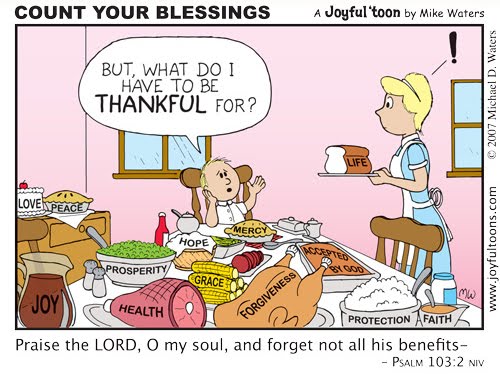
Count Those Blessings

I don't know if it's looked down upon to have a "favorite" gospel principle, but if I were asked to choose one I would have to say that Gratitude would at least make the top three for me. I just love the concept of truly appreciating what I really have, because I know that I am so blessed. But even despite my many blessings I am so lucky to have been given, I often find myself complaining, wanting more, and basically just being ungrateful. When I focus on what I do have rather than what I don't or wish I had, I find myself so much happier.


“It is a glorious time to live! No matter what trials await us, we can find the answer to that question, What shall we do? We, and those we love, will be guided and corrected and protected, and we will be comforted.” Boyd K. Packer, "the Cloven Tongues of Fire", Conference April 2000

“We can best express our gratitude for this glorious fullness by developing a more full love for all of humankind. And why not, for the Restoration tells us who our neighbors really are! Let our gratitude likewise be expressed by striving to become, attribute by attribute, more and more as Jesus is.” Neal A. Maxwell, "from the Beginning" Conference October 1993

“I have no greater joy than to hear that my children walk in truth. Let us so walk. Let us so honor the givers of this priceless gift of birth.” Thomas S. Monson, "Gifts" Ensign May 1993

“To the Lord Jesus we owe an undying debt of gratitude, for he bought us with a great price. It is impossible for us, weak mortals as we are, to fully comprehend and appreciate the sufferings he endured on the cross that he might gain for us the victory over death.” Henry B. Eyering, "Remembrance and Gratitude" Conference October 1989

“If you exercise faith, and with the gift of the Holy Ghost, you will find that memories of other blessings will flood into your mind. If you begin to express gratitude for each of them, your prayer may take a little longer than usual. Remembrance will come. And so will gratitude.” Henry B. Eyering, "Remembrance and Gratitude" Conference October 1989

“Thank you for being the kind of people you are and doing the things you do. May the blessings of heaven rest upon you.” Gordon B. Hinckley, "to the Women of the Church" Conference October 2003

“Express gratitude and love for what your spouse does for you.” Richard G. Scott, "the Eternal Blessings of Marriage" Ensign May 2011

“Gracias, danke, merci whatever language is spoken, ‘thank you’ frequently expressed will cheer your spirit, broaden your friendships, and lift your lives to a higher pathway as you journey toward perfection. There is a simplicity even a sincerity when ‘thank you’ is spoken.” Thomas S. Monson, First Presidency Message

“When we give thanks in all things, we see hardships and adversities in the context of the purpose of life… We are meant to learn and grow through opposition, through meeting our challenges, and through teaching others to do the same… the Lord will not only consecrate our afflictions for our gain, but He will use them to bless the lives of countless others.” Dallin H. Oaks, "give Thanks in all Things" Conference April 2003

“No matter our circumstances, no matter our challenges or trials, there is something in each day to embrace and cherish. There is something in each day that can bring gratitude and joy if only we will see and appreciate it.” Dieter F. Uchtdorf, "of Regrets and Resolutions", Liahona/ Ensign November 2012


Forgive & Forget?


Forgiveness is one of those concepts that is so much easier to preach about than to actually practice. When everything is going great and nobody has offended you, it seems ridiculous to hold a grudge or withhold forgiveness. But when someone does something to upset you, particularly something personal and/ or by a close friend once thought of as trustworthy; that is a whole different story. But even harder than forgiving others who have done us wrong, it seems that the ultimate challenge lies in forgiving ourselves. I know that we are often extremely critical of ourselves, and this habit is often overlooked, or even misinterpreted as respectable self- improvement. I am definitely not trying to say that high self- expectations are a bad thing, nor am I implying that it is best to set low expectations. I am simply trying to remind us that we need to forgive ourselves when we do slip up and make mistakes, because mistakes are gonna happen. After all, we're only human!

“Carrying a grudge is a heavy burden. As you forgive, you will feel the joy of being forgiven. At this Christmastime you can give and receive the gift of forgiveness. The feeling of happiness that will come will be a glimpse of what we can feel at home together in the eternal home for which we yearn.” Henry B. Eyering, "Home for Christmas" Liahona December 2009
 “The gospel teaches us that relief from torment and guilt can be earned through repentance. Save for those few who defect to perdition after having known a fulness, there is no habit, no addiction, no rebellion, no transgression, no offense exempted from the promise of complete forgiveness.” Boyd K. Packer, "the Brilliant Morning of Forgiveness" Conference October 1995
 “Forgiveness is powerful spiritual medicine. To extend forgiveness, that soothing balm, to those who have offended you is to heal. And, more difficult yet, when the need is there, forgive yourself!” Boyd K. Packer, "Balm of Gilead" October 1987
 “As you ponder such teachings, your own forgiveness will seem more attainable. As you pray from the depth of humility, with total honesty, our Father will hear you and the easing of the burden will begin.” Richard G. Scott "We Love you- Please Come Back" Church Publication
 “Let people repent. Let people grow. Believe that people can change and improve. Is that faith? Yes! Is that hope? Yes! Is it charity? Yes! Above all, it is charity, the pure love of Christ. If something is buried in the past, leave it buried. Don’t keep going back with your little sand pail and beach shovel to dig it up, wave it around, and then throw it at someone, saying, “Hey! Do you remember this?” Splat!” Jeffrey R. Holland, "Remember Lot's Wife" BYU Devotional January 2009
 “We cannot repent for someone else. But we can forgive someone else, refusing to hold hostage those whom the Lord seeks to set free.” Neal A. Maxwell, "Repentance" Conference April 1991
 “I think [forgiveness] may be the greatest virtue on earth, and certainly the most needed. There is so much of meanness and abuse, of intolerance and hatred. There is so great a need for repentance and forgiveness. It is the great principle emphasized in all of scripture, both ancient and modern. Somehow forgiveness, with love and tolerance, accomplishes miracles that can happen in no other way.” Gordon B. Hinckley, "Forgiveness", General Conference
 “Sometimes we can take offense so easily. On other occasions we are too stubborn to accept a sincere apology. Who will subordinate ego, pride, and hurt—then step forward with ‘I am truly sorry! Let’s be as we once were: friends. Let’s not pass to future generations the grievances, the anger of our time’? Let’s remove any hidden wedges that can do nothing but destroy.” Thomas S. Monson, "Hidden Wedges" Conference April 2002
“Immersion in the scriptures is essential for spiritual nourishment. The word of God inspires commitment and acts as a healing balm for hurt feelings, anger, or disillusionment.” Quentin L. Cook, "Can Ye Feel So Now?" Ensign/ Liahona November 2012
 “May your homes be filled with love and courtesy and with the Spirit of the Lord. Love your families. If there are disagreements or contentions among you, I urge you to settle them now.” Thomas S. Monson, "As We Close This Conference", Ensign/ Liahona May 2012

the Freedom to Choose

When I was younger, I always referred to and thought of the concept of Agency as "free" Agency. As I grew older I learned that the reason we refrain from calling it free agency is because this gift really isn't free at all. Adam and Eve were banished from the Garden of Eden because they chose to partake of the forbidden fruit. This was of course a vital part of God's plan, but because of this act of 'necessary disobedience' (a very complex concept, I know), Adam and Eve, and all of mankind thereafter, were subject to harsher, mortal lives, with the contrasting Good and Evil. Making the correct choice; good > evil, is where exercising our Agency comes into play.


“We have been given agency, we have been given the blessings of the priesthood, and we have been given the Light of Christ and the Holy Ghost for a reason. That reason is our growth and happiness in this world and eternal life in the world to come.” Robert D. Hales, "for a Reason", "to act for ourselves: the gift and blessings of agency"
 “Bondage, subjugation, addictions, and servitude come in many forms. They can be literal physical enslavement but can also be loss or impairment of moral agency that can impede our progress.” Quentin L. Cook, "regrets can impede our progress", "Lamentations of Jeremiah: Beware of bondage" Conference October 2013
 “In this Church that honors personal agency so strongly, that was restored by a young man who asked questions and sought answers, we respect those who honestly search for truth. It may break our hearts when their journey takes them away from the Church we love and the truth we have found, but we honor […]" Dieter F. Uchtdorf, "Honestly Seek for Truth", Ensign January 2013
 “God’s plan allows the adversary to tempt individuals so that they, while in this mortal world, can exercise their agency to choose good over evil, to choose to repent, and to choose to come unto Jesus Christ and follow His example.” Russell M. Nelson, Conference October 2013
 “You will learn to make reality of your worthy dreams for the future. You will be led to see a vision of your true potential and then, through obedience to correct principles and the consistent, appropriate use of moral agency, begin to convert that potential into reality.” Richard G. Scott, "Worthy Dreams for the Future", Conference October 1991
 “For relief of an ailment, as a doctor of medicine I might write a prescription. As an ordained Apostle, I would invoke the spiritual blessing of eternal perspective. Combined, my spiritual prescription would return the gift of agency to its rightful owner.” Ezra Taft Benson, "Combined with Spiritual Prescription", Conference April 1967
 “Those who violate this commandment in the exercise of their agency are answerable for losing the blessings which observance of this commandment would bring.” James E. Faust, "Those Who Violate the Commandment", Conference 1986
 “Addiction has the capacity to disconnect the human will and nullify moral agency. It can rob one of the power to decide. Agency is too fundamental a doctrine to be left in such jeopardy.” Boyd K. Packer, "Revelation in a Changing World", Conference October 1989
 “By virtue of this agency you and I and all mankind are made responsible beings, responsible for the course we pursue, the lives we live, the deeds we do.” Thomas S. Monson, "Choose ye this day", Conference October 2004
 “We must choose with our agency to obey in faith that the promised blessing will come, that the promise is true because it comes from God.” Henry B. Eyering, "Spiritual Preparedness: Start Early and Be Steady" Conference October 2005


Monday, December 16, 2013

the tragedy of Pornography

Although I have never personally struggled with pornography, or even known someone close to me who has, I am aware that it is a devastating habit that destroys hundreds of marriages, relationships, and individuals. And even though like I said this is not necessarily a struggle/ temptation/ issue for me; because I have heard many conference talks and read numerous ensign articles on the subject, I am aware of the seriousness such a habit entails, and I am so grateful to have successfully avoided it my whole life. It is comforting to know that those who do struggle with such a devastating habit can receive help if the are willing to change, and this idea actually goes hand- in- hand with my previous post on the Atonement.


"Judging by its demoralized works, atheism has now quit advancing in this country simply because it has arrived. Not just rhetorically but actually—our country is in an ungodly mess. City streets are terrorized by crime; our biggest and most expensive campuses are paralyzed by nihilism and anarchy; with special license from the Supreme Court, theaters are boldly featuring sex perversion and the newsstands are loaded with hard‑core pornography. Big‑name investigating commissions have told us all about riots, crime, progress, and poverty, but always in materialistic terms of money, housing, social service jobs, and birth control—without a word about the possibilities for personal moral self‑restraint."
Ezra Taft Benson, Godless Forces Threaten Us (Ezra Taft Benson, 1969 Semi‑Annual General Conference, Improvement Era)

"Tenderness and respect—never selfishness—must be the guiding principles in the intimate relationship between husband and wife. Each partner must be considerate and sensitive to the other's needs and desires. Any domineering, indecent, or uncontrolled behavior in the intimate relationship between husband and wife is condemned by the Lord. Pornography and unwholesome fantasies erode one's character and strike at the foundation of a happy marriage."
Howard W. Hunter, The Prophet Howard W. Hunter, "Being a Righteous Husband and Father," Ensign, Nov. 1994, page 50

 "The Church opposes pornography in any form. Indulgence in pornography damages individual lives, families, and society. Such indulgence drives away the Spirit of the Lord. Church members should avoid all forms of pornographic material and oppose its production, dissemination, and use. The booklet Let Virtue Garnish Thy Thoughts provides counsel on how to avoid and overcome problems with pornography."
First Presidency, Church Handbook of Instructions, section 21.4.9
 “Pornography is like a raging storm, destroying individuals and families, utterly ruining what was once wholesome and beautiful.” Gordon B. Hinckley, "a tragic evil among us", Conference October 2004
 “We mortals have a limited view of life from the eternal perspective. But if we know and understand Heavenly Father’s plan, we realize that dealing with adversity is one of the chief ways we are tested.” M. Russell Ballard, "we are tested", Ensign May 1995
 “There are times in our struggle with the adversities of mortality when we become weary, weakened, and susceptible to the temptations that seem to be placed in our pathways.” Howard W. Hunter, Ensign, October 2010
 “As you overcome adversity in your life, you will become stronger. Then you will be better able to help others —those who are working, in their turn, to find a safe harbor from the storms that rage about them.” Joseph B. Worthlin, "Come what may and love it", Conference October 2008
 “We need strength beyond ourselves to keep the commandments in whatever circumstance life brings to us. … The combination of trials and their duration are as varied as are the children of our Heavenly Father. No two are alike. But what is being tested is the same, at all times in our lives and for every person: will we do whatsoever the Lord our God will command us?” Henry B. Eyering, "In the strength of the Lord", Conference April 2004
 “We may not avoid every storm of life, but following the counsel of living prophets will help us ride out the storm.” Quentin L. Cook, "ride out the storm", Ensign November 2013
 “When you are faced with a test of faith, stay within the safety and security of the household of God. There is always a place for you here. No trial is so large we can’t overcome it together.” Neil L. Andersen, "stay within the safety and security", Ensign October 2012
 http://www.lds.org/ensign/2013/07/to-the-tender-wives-what-i-have-learned-from-my-husbands-addiction-to-pornography?lang=eng&query=pornography+lds


At- one- ment

I love the concept of the atonement, because it is a concept of forgiveness, second chances, and most of all hope for a better future. First of all, let me clarify what exactly I'm talking about when I say "atonement". The atonement refers to the crucifixion and resurrection of Jesus Christ, and most especially the promise of our own resurrection if we follow in His footsteps. Without the atonement, everyone would be lost and alone, with a dim and foreboding future to look forward to. But with the Atonement, we know that even when we make mistakes, not all is lost, This is so reassuring to me because as mortals, we all make our fair share of mistakes. It is so refreshing to know that despite our earthly flaws we can still strive for and look forward to eternal salvation.


"          His mercy endureth forever, and His hand is stretched out still. His is the pure love of Christ, the charity that never faileth, that compassion which endures even when all other strength disappears.” Jeffrey R. Holland, "Prophets in the Land again", Conference 2006
  Lucifer will encourage you to continue to relive the details of past mistakes, knowing that such thoughts can hamper your progress. Thus he attempts to tie strings to the mind and body so that he can manipulate you like a puppet to discourage personal achievement.” Richard G. Scott, "the Atonement can secure your Peace and Happiness", Conference, October 2000
  “I have listened to possibly a thousand major transgressions; and each time after a truly repentant transgressor has left my office, I have either knelt behind the desk or bowed my head in prayer and said, ‘Lord, forgive him or her, I pray thee. If not, blot my name also out of thy book.’ “Though their sins be as scarlet, they may become white as the driven snow (see Isa. 1:18), and the Lord has promised he would remember their sins no more (see D&C 58:42).” Vaughn J. Featherstone, Ensign, Nov. 1980
 
    “Unless we believe in repentance and restoration, unless we believe there can be a way back from our mistakes–whether those sins be sexual or social or civil or academic, whether they be great or small–unless we believe we can start over on solid ground with our past put behind us and genuine hope for the future–in short, if we cannot believe in the compassion of Christ and His redemptive love, then I think we in our own way are as hopeless as Macbeth and our view of life just as depressing. We do become shadows, feeble players on a perverse stage, in a tale told by an idiot. And unfortunately, in such a burdened state, we are the idiots.” Jeffrey R. Holland, A Robe, a Ring, and a Fatted Calf, BYUDA 1/84

"All the prophets have promised that both are ahead. One day he will honor the Mount of Olives again. This time he will descend in triumph. When his foot touches it, the mount itself shall separate, be shaken, and an earthquake will follow. The earth will be purged and cleansed and will eventually shine with celestial light. We are promised we may share in those culminations to descend with him or to ascend to meet him. And either of those is glorious.” Truman G. Madson, The Olive Press, BYU Devotional Address, 5/82
     “In its sweep and scope, atonement takes on the aspect of one of the grand constants in nature—omnipresent, unalterable, such as gravity or the speed of light. Like them it is always there, easily ignored, hard to explain, and hard to believe in without an explanation. Also, we are constantly exposed to its effects whether we are aware of them or not.” Hugh Nibley, Approaching Zion, near end of final chapter
  “The tree of life… is the love of God. The love of God for His children is most profoundly expressed in His gift of Jesus as our Redeemer: ‘God so loved the world, that he gave his only begotten Son’. To partake of the love of god is to partake of Jesus’ Atonement and the emancipations and joys which it can bring.” Neal A. Maxwell, Lessons from Laman and Lemuel, Conference, October 1999
      We, like Adam and Eve, must make the best of our circumstances. We need not apologize for the typical untidiness of those circumstances. It is their very lone and dreary nature that allows them to shape us as they do. Perhaps we can only appreciate and comprehend the gift of eternal life after we do all we can do. Until we are prepared in what may look like very imperfect ways to receive them, we are not ready for the gifts that perfect our nature.” Bruce C. Hafen, Beauty for Ashes, Ensign 4/90
  “Peace is the fruit of righteousness. It cannot be bought with money, and cannot be traded nor bartered. It must be earned. The wealthy often spend much of their gains in a bid for peace, only to find that it is not for sale. But the poorest as well as the richest may have it in abundance if the total price is paid. Those who abide the laws and live the Christ-like life may have peace and other kindred blessings, principal among which are exaltation and eternal life. They include also blessings for this life.” Spencer W. Kimball, The Miracle of Forgiveness, p. 363-4
       Life is hard, but life is simple. Get on the path and never, ever give up. You never give up. You just keep on going. You don’t quit, and you will make it. There is only one way to happiness and fulfillment. Jesus Christ is the Way. Every other way, any other way, whatever other way is madness.” Lawrence E. Corbridge, The Way, LDS General Conference, October 2008

Sunday, December 15, 2013

Family First

I agree with our church leaders both past and present who continually emphasize the importance of the family. As Latter- Day Saints we are taught that the family is to be the epitome of focus in our lives, a principle that remains important despite decreasing respect for and support of such a notion. In this day and age, as we are constantly reminded in General Conference messages or simply by taking a look around, sin seems to be more prevalent and accepted than ever before; "what is good is seen as evil and what is evil is seen as good". The family seems to be the first institution that is attacked, with disturbing popularity. There are countless articles, publications, political acts, and the like that are focused on attacking the family, and with alarming success rates. It is more important than ever before to not only recognize the importance of the family, but to support and unite the families that we have.  


·         “As parents, we should remember that our lives may be the book from the family library which the children most treasure. Are our examples worthy of emulation? Do we live in such a way that a son or a daughter may say, ‘I want to follow my dad,’ or ‘I want to be like my mother’? Unlike the book on the library shelf, the covers of which shield its contents, our lives cannot be closed. Parents, we truly are an open book in the library of learning of our homes.” Thomas S. Monson “Dedication Day,” Ensign, Nov. 2000
 
·         "Is there someone in your life who perhaps needs forgiveness? Is there someone in your home, someone in your family … who has done an unjust or an unkind or an unchristian thing? All of us are guilty of such transgressions, so there surely must be someone who yet needs your forgiveness."  Jeffrey R. Holland Amazed at the Love Jesus Offers Me Conference December 2008
 
·         The spirit must be freed from tethers so strong and feelings never put to rest, so that the lift of life may give buoyancy to the soul. In many families, there are hurt feelings and a reluctance to forgive. It doesn’t really matter what the issue was. It cannot and should not be left to injure. Blame keeps wounds open. Only forgiveness heals.Thomas S. Monson, "Hidden Wedges",  Conference April 2002
 
·        " Don’t treasure up past wrongs, reprocessing them again and again. In a marriage relationship, festering is destructive; forgiving is divine (see D&C 64:9–10). Plead for the guidance of the Spirit of the Lord to forgive wrongs …, to overcome faults, and to strengthen relationships" Dallin H. Oaks, "Divorce", Conference April 2007
 
·         If we are to have unity, there are commandments we must keep concerning how we feel. We must forgive and bear no malice toward those who offend us. The Savior set the example from the cross: ‘Father, forgive them; for they know not what they do’ (Luke 23:34). We do not know the hearts of those who offend us.” Henry B. Eyering, "That we may be One", Ensign November 2008
 
·         "You may be carrying a heavy burden of feeling injured by another who has seriously offended you. Your response to that offense may have distorted your understanding so that you feel justified in waiting for that individual to ask forgiveness so that the pain can leave. The Savior dispelled any such thought when He commanded: …‘I, the Lord, will forgive whom I will forgive, but of you it is required to forgive all men’ [D&C 64:10].” Richard G. Scott, "To be free of Heavy Burdens", Ensign November 2002
 
·         Don’t treasure up past wrongs, reprocessing them again and again. In a marriage relationship, festering is destructive; forgiving is divine (see D&C 64:9–10). Plead for the guidance of the Spirit of the Lord to forgive wrongs …, to overcome faults, and to strengthen relationships" Dallin H. Oaks, "Divorce", Conference April 2007
 
·         "Perhaps there has never been a time when we had greater need to pray and to teach our family members to pray. Prayer is a defense against temptation. It is through earnest and heartfelt prayer that we can receive the needed blessings and the support required to make our way in this sometimes difficult and challenging journey we call mortality.” Thomas S. Monson, "Three Goals to Guide You", Conference October 2007
 
·        
'
Parents should teach their children to pray. The child learns both from what the parents do and what they say. The child who sees a mother or a father pass through the trials of life with fervent prayer to God and then hears a sincere testimony that God answered in kindness will remember what he or she saw and heard. When trials come, that individual will be prepared.” Henry B. Eyering, "That he may write upon our hearts", Conference August 2009
·   "  We are told in the scriptures that Satan will tempt us in the last days before the Savior comes again. For this reason, our children need to know that God and Jesus Christ will always love them and answer their prayers. This knowledge will bring them abiding strength.” Robert D. Hales, "Teaching by Faith", Ensign September 2003